

Applications
Applications
Applications of
FRP Reinforcement
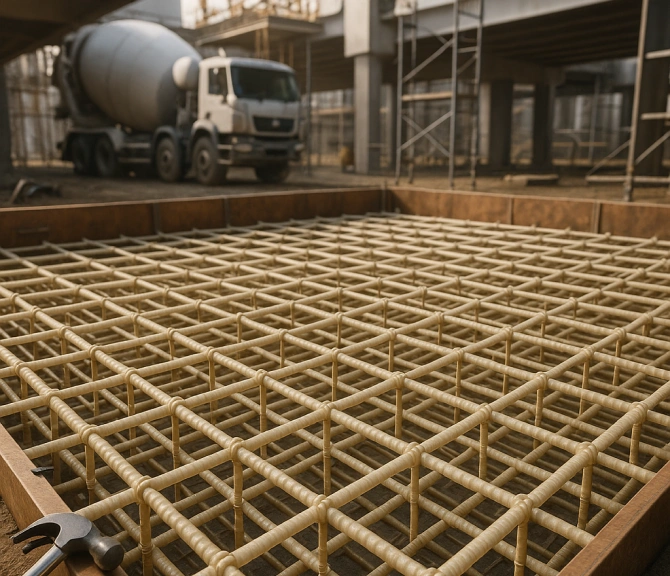
FRP (Fiber Reinforced Polymer) reinforcement bars are changing the way we build.
Their light weight, corrosion resistance, and durability make them ideal for concrete structures that demand long service life with minimal maintenance.
From coastal bridges to industrial flooring, FRP reinforcement offers strength that lasts.
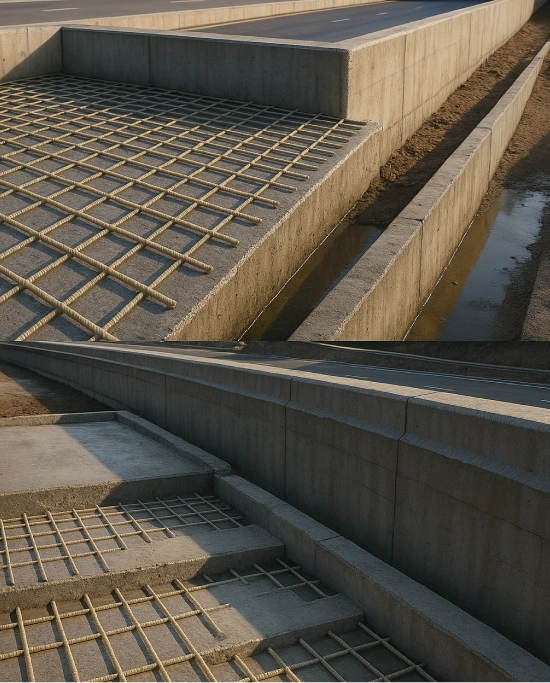
Infrastructure & Bridges
FRP in Roads, Bridges, and Flyovers
FRP bars are used in bridge decks, approach slabs, and retaining walls where corrosion and vibration are major issues.
- Long-lasting performance in coastal and humid regions
- No corrosion, even in de-icing or saline environments
- Lower maintenance cost over time
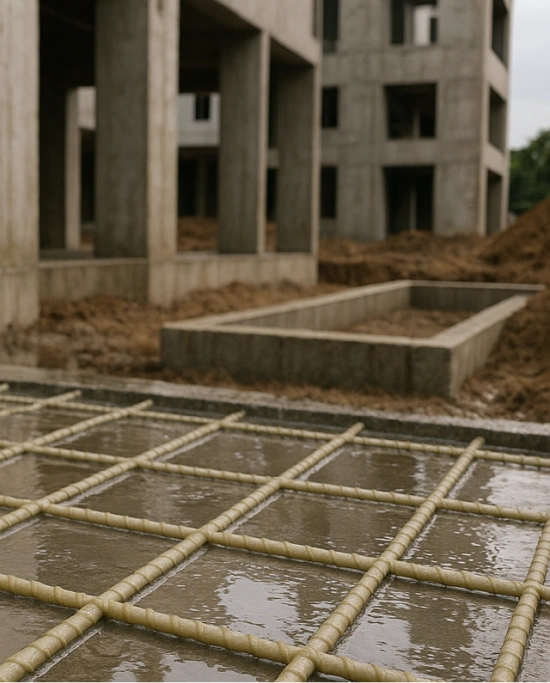
Buildings & Architecture
FRP in Residential and Commercial Structures
FRP bars are an ideal alternative to steel in structural slabs, walls, and foundations, especially where water exposure or chloride presence is expected.
- Non-magnetic and non-conductive which is ideal for hospitals, labs, and data centers
- Lightweight and easy to install
- Eliminates corrosion issues in bathrooms, basements, and coastal homes
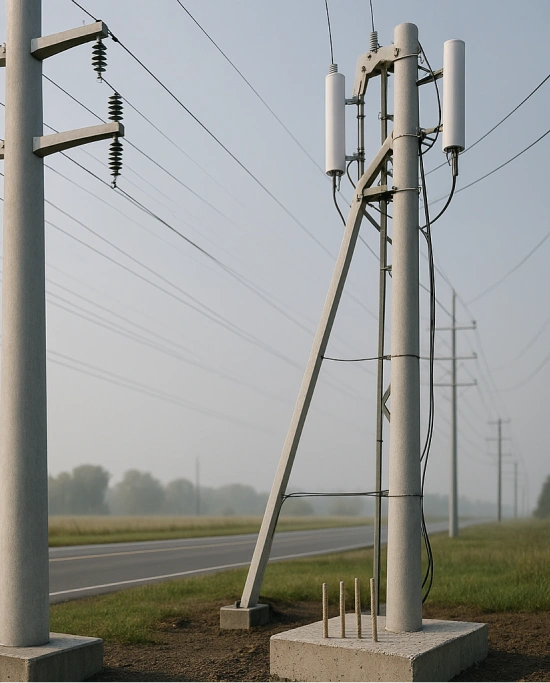
Electric & Utility Structures
FRP in Power and Communication Infrastructure
FRP’s non-conductive properties make it ideal for electric and telecommunication structures such as poles, foundations, and cable supports.
- Electrically non-conductive and non-magnetic
- Lightweight for easier transportation and installation
- High resistance to environmental degradation
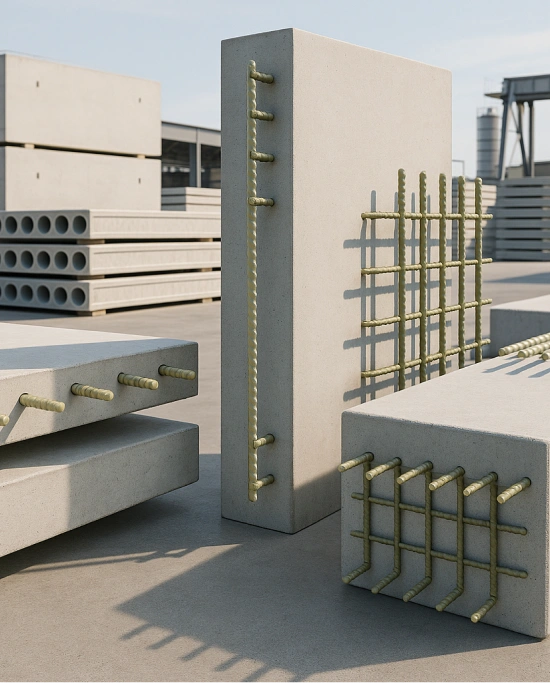
Precast & Modular Construction
FRP in Precast Panels and Structural Elements
FRP meshes and bars are increasingly used in precast slabs, walls, and beams for faster, corrosion-free construction.
- Ready-to-use reinforcement grids for quick installation
- Reduces fabrication time and site labor
- Ensures uniform strength and durability in mass production
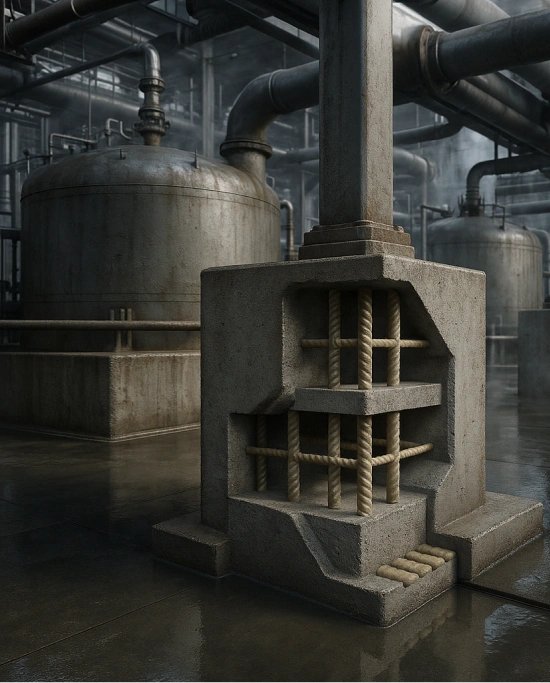
Industrial & Chemical Plants
FRP for High-Corrosion Zones
Industrial environments expose reinforcement to chemicals, moisture, and heat. FRP ensures structural integrity and long-term reliability without corrosion.
- Resistant to acids, alkalis, and industrial chemicals
- Stable under varying temperatures
- Reduces downtime from material degradation
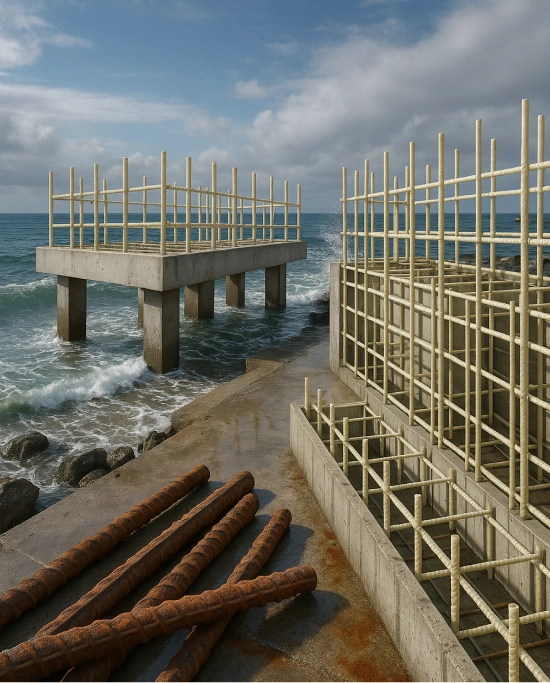
Marine & Coastal Structures
FRP in Ports, Harbors, and Coastal Defenses
Saltwater corrosion is one of the biggest challenges in concrete design. FRP solves this naturally.
- Perfect for jetties, docks, and retaining walls
- Eliminates corrosion from salt exposure
- Long-term durability in submerged or splash zones
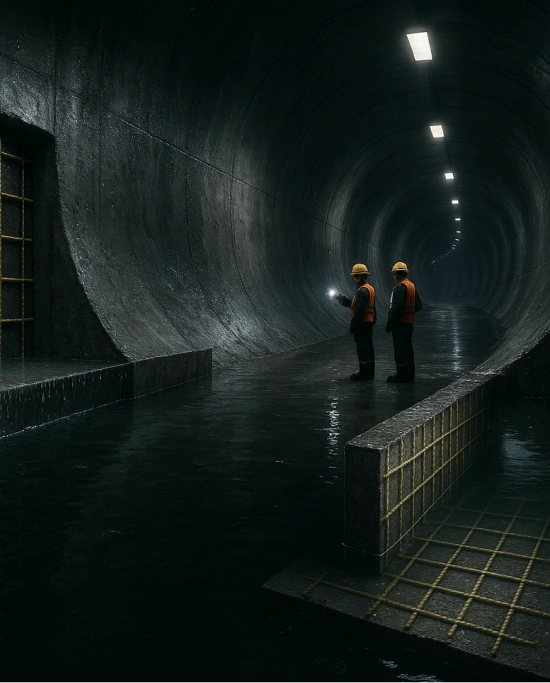
Tunnels, Foundations & Retaining Walls
FRP in Underground and High-Moisture Areas
FRP’s non-corrosive nature makes it perfect for tunnels, retaining walls, and foundation slabs in high groundwater areas.
- Prevents rust-related cracking
- Improves structural lifespan and reduces maintenance cost
- Simplifies design in areas with limited ventilation or drainage
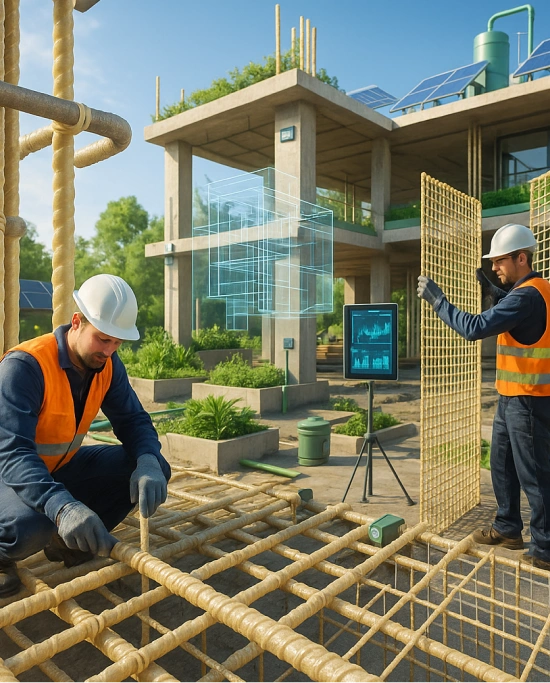
Specialized & Emerging Uses
FRP in Smart and Sustainable Construction
With continuous research and development, FRP is now being explored for:
- Carbon & basalt fiber bars for lightweight structures
- FRP meshes for precast panels and modular projects
- Hybrid reinforcements in 3D printed or modular buildings
“Engineered for Strength. Designed for Longevity”
Ready to Reinforce Your Next Project with FRP?
Tell us about your requirements and we’ll recommend the most efficient, durable, and cost-effective solution for your structure.