


Sustainability
Sustainability
Engineering with
Purpose & Responsibility
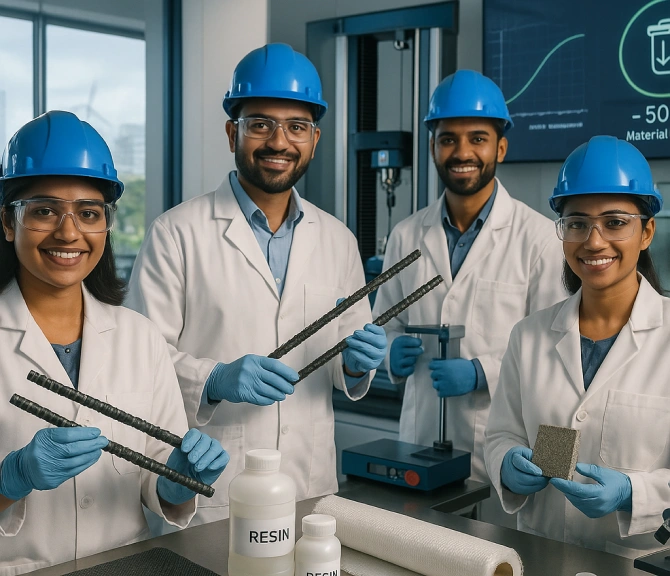
At Tapashri Engineering, sustainability begins with the materials we make and the way we make them.
By designing long-lasting FRP reinforcement systems, we reduce the need for replacement, waste, and carbon emissions, helping build infrastructure that endures with less impact on the planet.
FRP’s Environmental Benefits
Traditional steel reinforcement corrodes over time, leading to repairs, replacements, and high material waste. Our FRP (Fiber Reinforced Polymer) bars are non-corrosive, lightweight, and durable, helping reduce both material use and maintenance cycles throughout a structure’s life.
Corrosion-Free Performance
FRP bars don’t rust or deteriorate — extending structure lifespan and reducing waste from repairs.
Lightweight, Less Energy
FRP’s lower weight means less fuel use in transportation and easier handling on-site.
Long Life, Less Replacement
Durable reinforcement reduces the frequency of reconstruction, conserving both materials and resources.
Reduced Carbon Footprint
Building stronger structures with a smaller footprint
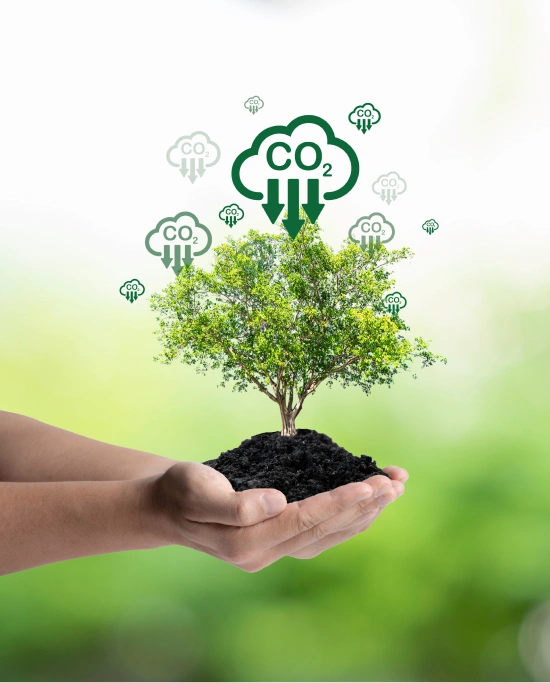
Because FRP structures last significantly longer and require fewer replacements, their lifecycle carbon footprint is much lower than conventional steel reinforcement at every stage from manufacturing and transport to maintenance.
Our ongoing efforts include:
- Analyzing lifecycle emissions for each FRP product
- Minimizing embodied energy in production
- Supporting projects aligned with low-carbon construction goals

Our Goal
To create reinforcement systems that last longer, perform better, and waste less, contributing to a journey towards sustainable, resilient infrastructure.
Sustainable Manufacturing
We follow environmentally responsible practices.
Low-Waste Production
Optimized material usage and resin control minimize manufacturing waste.
Energy Efficiency
Curing and cutting operations are designed to use less energy while maintaining product precision.
Collaborative Innovation
Working with institutions and research bodies to develop cleaner, more efficient composite technologies.
As we expand, we aim to integrate renewable energy sources and closed-loop recycling systems for future FRP product lines.
Subscribe to Our Newsletter
Get updates on products, research collaborations, and new developments in FRP technology.